Tech
Nextitan
Drill faster, further, and safer in hard rock. At a lower cost per foot.
Scroll for more

NexTitan

What is NexTitan?
NexTitan is an autonomous downhole drive system. It senses and responds to drilling conditions right at the bit. It adds controlled and consistent weight on bit and makes adjustments in real time. As a result NexTitan mitigates stick-slip, bit bounce, pipe buckling, torsional vibrations, and whirl so you can drill smoothly and continuously in hard rock or longer laterals.
See use cases
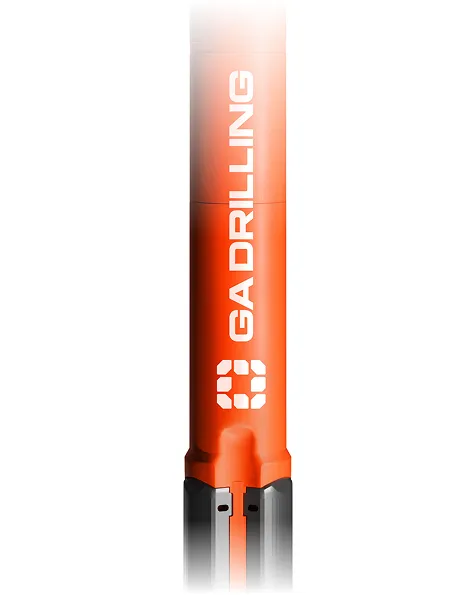
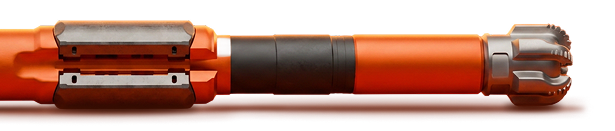
NextTitan drilling tool rendering
Key Functionality
Solve problems faster than from the rig floor
NexTitan senses dysfunction at the bit, corrects it in real time, and adapts its response as conditions change.
Key features
Hydraulically powered, with multiple electronic control modes. Set target rate of penetration (ROP), weight on bit (WOB), constant torque, differential pressure, and more.
Compatible with your existing bottom hole assembly (BHA) and standard drilling tools. Run it standalone or connect it to other tools with controller area network (CAN) bus.
Designed to learn: performance repeats across a basin and cost per well keeps dropping.
Has three built-in failsafes that collapse the tool to a neutral position.
Impact
Up to 3x
faster ROP in
hard rock
Up to 2x
longer bit life
Fewer trips
lower cost per well
Differentiation

The only tool of its kind

Every rig has a top drive. This is the bottom drive: nothing else on the market drives and controls the bit from downhole.

Not just a damper
Dampers react after dysfunction starts. NexTitan prevents it from starting.
Not just a blind thruster
Thrusters push with fixed force. NexTitan controls it, push and pull, as the rock changes.
Not just a tractor
Tractors help move the BHA but have limited power. NexTitan can drive the BHA with controlled force of +30k lbf.
Business Case at a Glance
Performance
boost
Up to 3x
Faster ROP in hard
rock
Up to 30k lbf
WOB per unit
Real-time
Optimization
Operational
gains
Lower
Cost per well
Less
NOn-productive time
Fewer trips
Up to 2x
Longer bit runs
Risk
reduction
Smoother
drilling
Predictive
Maintenance
Improved
reliability and
crew safety
Use cases

Explore use cases

Inclined and horizontal wells
Maximize reservoir contact with inclined and horizontal wells. NexTitan enables efficient drilling in hard, hot formations, improving geothermal well economics.
Read more
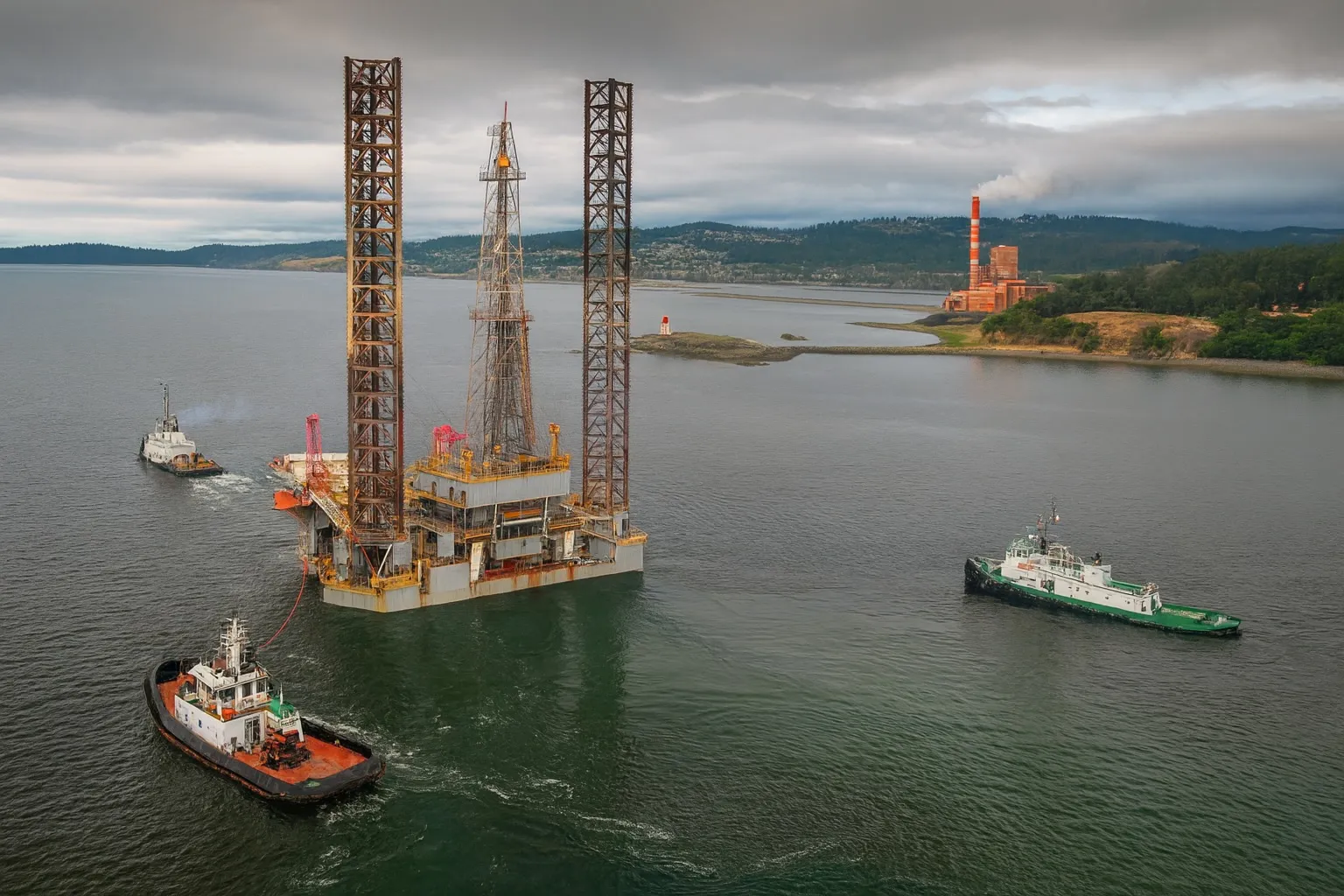
Offshore wells with high day rates
Faster offshore drilling reduces rig time, cuts millions in costs, lowers risks, and boosts project NPV through earlier well completion.

Read more
Drilling for industrial use
Decarbonize factories, data centers, and power plants with scalable geothermal. Factory-style drilling cuts costs and enables rapid well programs.
Read more
Want to know more?

Frequently asked questions

What is NexTitan?

NexTitan is an autonomous downhole drive unit that applies and controls force directly at the bit. Think of it as taking 90% of the top drive functionality to the bottom of the well. Instead of transferring weight through kilometers of drill string, the tool generates controlled thrust right where the rock is. In simple terms, NexTitan brings downhole drilling automation directly to the BHA. It is built for drilling oil & gas and geothermal wells, where conventional weight transfer struggles most.

How does it work?‍

The tool grips against the wellbore just above the drilling assembly and an electrohydraulic actuator applies controlled axial thrust to the bit. A closed-loop control system running at 100 Hz holds that force steady as the formation changes, which delivers stick-slip mitigation at the source instead of damping it downstream. The tool is powered hydraulically by the drilling fluid itself, diverting a small share of flow through its valve system.

How is NexTitan different from thrusters and vibration tools already on the market?

Every commercially deployed downhole tool today is passive or reactive: it absorbs vibration, damps stick-slip after it starts, or delivers thrust without control. Surface automation platforms are active but sit at the rig floor, kilometers from the problem which delays their reaction time. NexTitan is the only tool that actively applies and controls force at the bit, downhole, in a closed loop.

What happens if NexTitan fails downhole?

NexTitan is designed with three independent failsafe mechanisms. If it loses function, mechanical retraction elements collapse it to a neutral position. In essence, it behaves like an expensive stabilizer. The tool trips out with the string like any other BHA component.

Will it get stuck in the well?

The gripping elements are pistons and their geometry is designed to prevent debris from accumulating behind them. In hard rock testing at NORCE Ullrigg, the tool operated in open hole with simultaneous string rotation and moved along both cased and open hole sections with no gripper-induced sticking. If anything does go wrong, the failsafe design returns the tool to neutral.

Does NexTitan change how the driller works?

The driller keeps full control, the same way a self-driving car still has a wheel and brakes. NexTitan manages force delivery downhole and responds to dysfunction faster than any surface correction could, while the driller keeps doing what they would always do. It assists expertise instead of replacing it.

Is it compatible with my BHA, bits, and downhole tools?

Yes. NexTitan sits in the bottom hole assembly (BHA) and applies force axially to whatever is below it, so standard polycrystalline diamond compact (PDC) bits work without modification. Measuring while drilling (MWD) and logging while drilling (LWD) tools run above or below it without signal interference, and for directional sections it pairs with a mud motor or rotary steerable system (RSS). The motor or RSS handles trajectory while NexTitan manages force delivery. Connections are standard API.

How is NexTitan being tested?

At NORCE Ullrigg in Stavanger, NexTitan delivered up to 32,000 lbf of open-hole thrust in hard rock, with simultaneous string rotation and no sticking. Earlier multi-unit field testing demonstrated 7.5 hours of continuous drilling. The current test program focuses on continuous drilling length and operating endurance in vertical wells, ahead of the first commercial pilots.

What performance gains can operators expect?

With NexTitan, operators can expect a higher rate of penetration (ROP), longer laterals, longer bit and BHA runs, and fewer trips. That adds up to cost per foot savings, fewer rig days, and less non-productive time (NPT).Operators can also expect less repair maintenance and less risk. The precise multipliers are exactly what the upcoming field test and pilot program is designed to quantify. We'll share results as they come in.

Where is NexTitan the right fit, and where is it not?

NexTitan is built for oil & gas and geothermal wells where drilling dominates the cost line. It’s ideal for deep, hot hard rock, and long laterals where slow penetration, tool damage, and trips add up. It is not the right tool for very shallow wells or very short runs, where it would add complexity without payback.

Can NexTitan handle geothermal drilling temperatures?

The tool is rated to 175°C circulating temperature at the bit. That covers most current geothermal targets, because circulating temperature during drilling runs well below the static reservoir temperature. Pre-job data from active geothermal projects shows circulating temperatures of 100 to 163°C in reservoirs that are far hotter at rest. For hotter wells, active mud cooling extends the reach further, and higher temperature ratings are on the development roadmap.

Is NexTitan commercially available today?

NexTitan is available for pre-order and is being deployed with partners through structured drilling programs.

Get started

Take the next step